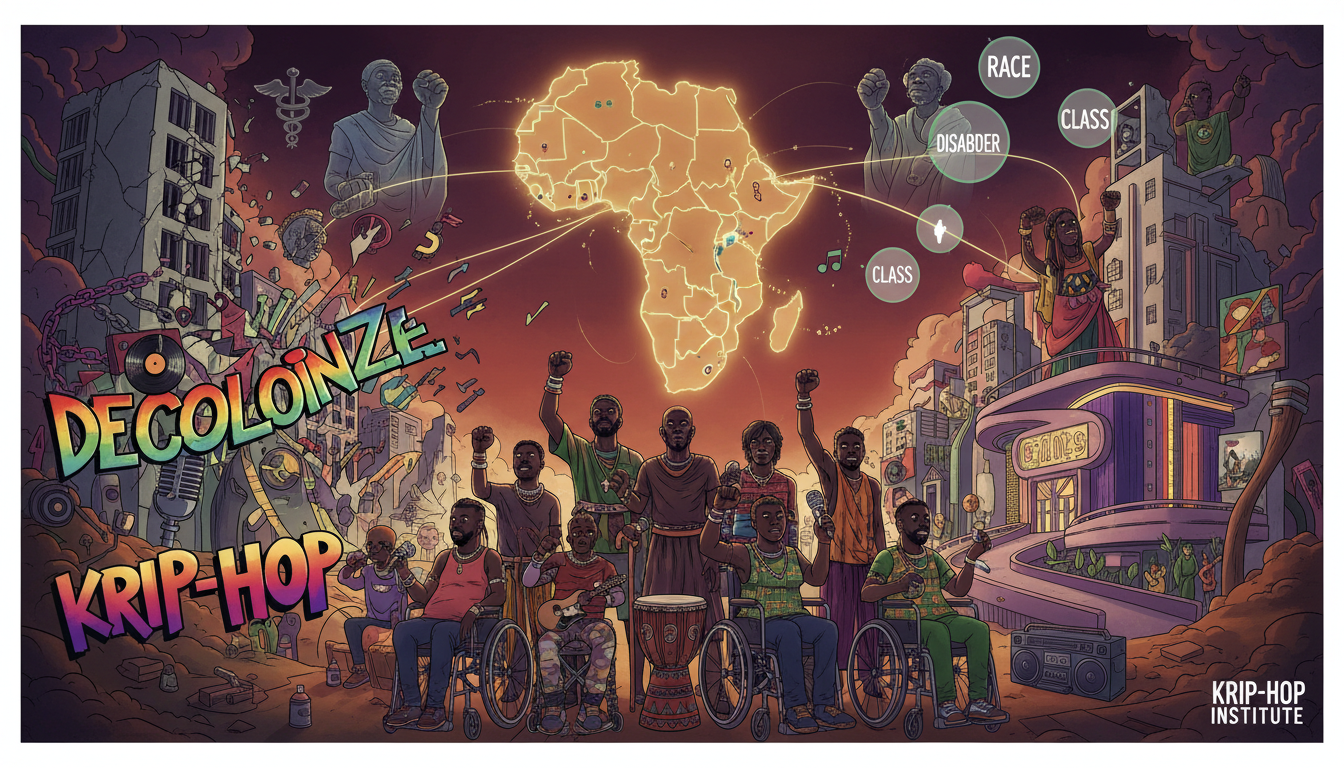
Decolonial Theories in Krip-Hop
Decolonial theories in Krip-Hop focus on dismantling Western, ableist structures by centering the lived experiences of Black and Indigenous people with disabilities. Krip-Hop Nation integrates Pan-Africanism and disability justice to reclaim narratives from colonial “damage-centered” frameworks.
Core Decolonial Frameworks in Krip-Hop
Key frameworks include Black Krip Theory, which merges Disability Studies and Black Studies, Afro-Krip, a term defining Blackness to include disabled people in the African diaspora, and “Kripping,” the practice of applying a disability justice lens to Black radical thought. Drawing on Frantz Fanon, Krip-Hop is also seen as “combat literature” for liberation.
Key Theoretical Objectives
Krip-Hop aims to challenge compulsory able-bodiedness, reclaim the history of Black disabled ancestors, educate communities through initiatives like the upcoming Krip-Hop Institute to combat “Black ableism”, and build transnational solidarity against colonial practices through global networks and collaborative art.
Decolonial theories in Krip-Hop blend disability justice with anti-colonial thought, using hip-hop’s cultural power to challenge Western-centric views of disability, reclaim Black disabled narratives, and dismantle “Black ableism” within Black communities, advocating for liberation and building on disabled ancestors’ legacies, as seen in Krip-Hop Nation’s work to create space, challenge media, and foster Black disabled empowerment.
Key Concepts
- Reclaiming Narratives: Using hip-hop to counter stereotypical portrayals of disability,
centering Black disabled experiences, and reclaiming disabled ancestors’ contributions. - Challenging Ableism: Addressing both societal ableism and internal “Black ableism”
(ableism within the Black community) to foster healing and recognition, says Leroy
Moore. - Afro-Krip/Pan-African Disability Justice: Extending these ideas across the African
diaspora, building solidarity and understanding Black disabled experiences globally,
notes Krip-Hop Nation. - Decolonial Praxis: Using art and activism (music, poetry) to disrupt coloniality, promote
new ways of being, and create space for Black disabled people.
Krip-Hop Nation’s Role - Foundation: Krip-Hop Nation is a collective of disabled artists challenging erasure and
exploitation, demanding recognition and political education. - Methods: They use hip-hop to advocate, teach, challenge media, and create spaces for Black disabled cultural expression and political understanding.
- Goals: To educate the Black community about disability, build disability solidarity, and advocate for policy changes, as detailed by the upcoming Krip-Hop Institute.
Connection to Decolonial Theory
- Decolonial disability studies critiques Western disability frameworks for ignoring non-
Western contexts and silencing Global South voices, which aligns with Krip-Hop’s goal to center marginalized voices and challenge coloniality. - By “kripping” Black radical movements, Krip-Hop theorists integrate disability into
analyses of power, recognizing disability as central to Black resistance and identity.