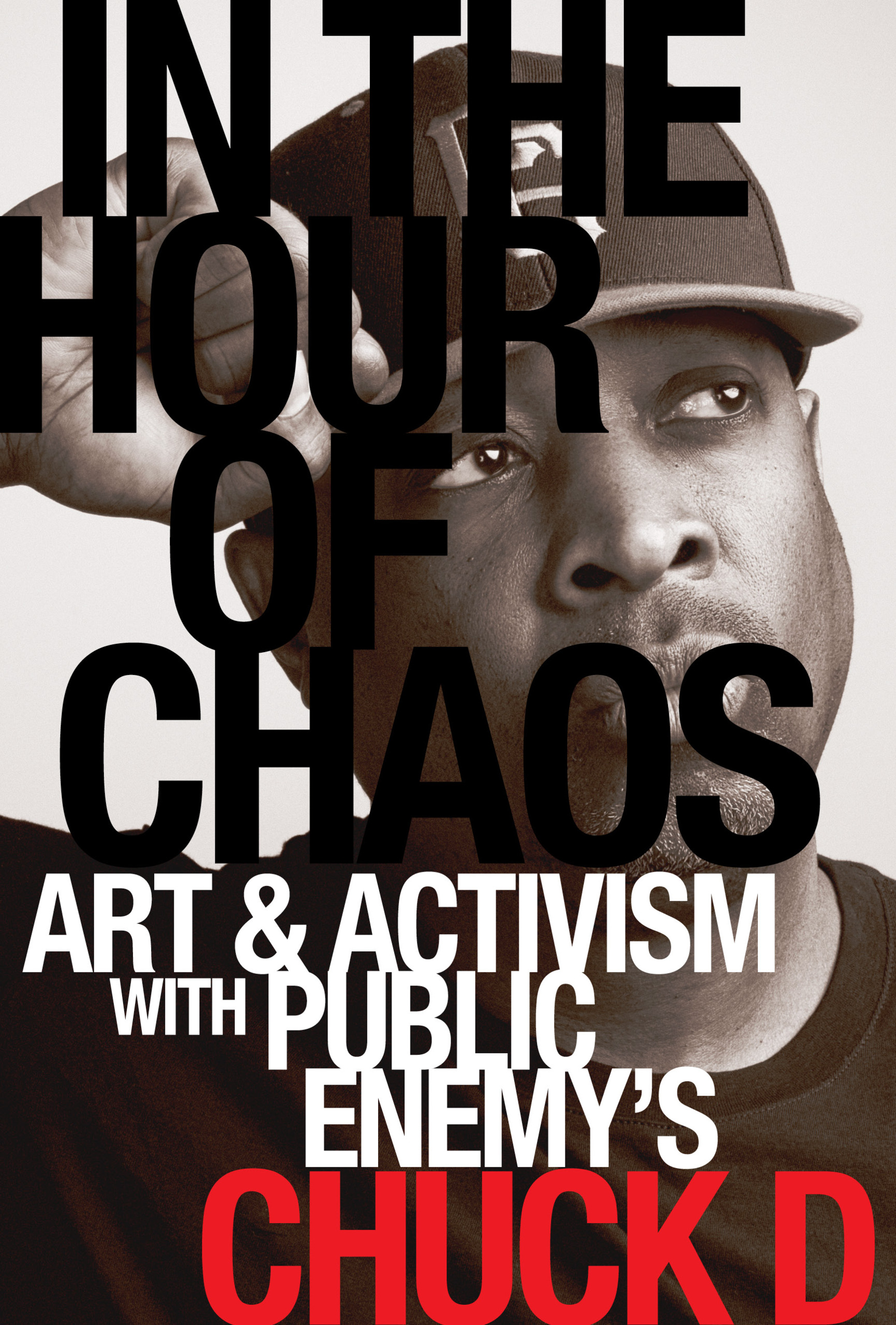
Chuck D and Public Enemy laid critical groundwork for what would later emerge as Krip-Hop Nation through militant lyrics, political education, sonic disruption, and radical Black cultural resistance. Public Enemy’s music challenged white supremacy, media distortion, state violence, and the criminalization of Black life while insisting that Hip-Hop could function as revolutionary education. Krip-Hop Nation builds upon this foundation by centering Black disability politics, disability culture, and anti-ableist resistance within Hip-Hop culture.
 This connection becomes explicit in my Public Enemy n a Krip-Hop Remix. The EP (2023) functions as both homage and political intervention. Rather than simply remixing Public Enemy sonically, my “krips” Public Enemy’s revolutionary framework by inserting disability justice, institutional violence against disabled people, police brutality, environmental racism, and Black disabled survival into the center of politically conscious Hip-Hop. The project demonstrates how Krip-Hop Nation extends the radical lineage established by Public Enemy while exposing the absence of disability analysis in traditional Black nationalist and Hip-Hop political discourse.
Public Enemy’s “Fight the Power” becomes especially important when understood through Krip-Hop theory. Chuck D’s line: “What we need is awareness, we can’t get careless” connects directly to my critique of ableism within Black communities and social justice movements. In Public Enemy n a Krip-Hop Remix, awareness is expanded beyond race consciousness to include disability consciousness. I reframe political resistance by asking listeners to recognize how disabled Black bodies are disproportionately impacted by poverty, segregation, incarceration, medical racism, police violence, and educational exclusion.
My remix methodology itself reflects Krip-Hop aesthetics. Public Enemy’s original sound, dense samples, layered noise, sirens, fragmented rhythms, and sonic disruption already challenged mainstream musical order. I try to expand this disruption by bringing disabled embodiment into Hip-Hop production and performance. Krip-Hop’s sound politics refuse ableist expectations around speech, movement, breath control, rhythm, and bodily presentation. Through remix culture, my symbolically inserts disabled Black voices into a Hip-Hop canon that historically marginalized disability culture.
Chuck D’s famous declaration that rap was “Black America’s CNN” also echoes throughout my EP. Public Enemy n a Krip-Hop Remix acts as disability-centered reporting from the margins. The EP documents institutional neglect, inaccessible systems, state violence, and cultural erasure while transforming disabled experience into political theory and cultural production. Like Public Enemy, Krip-Hop Nation uses music as journalism, organizing, education, and survival.
The remix project is also significant because it bridges generations of Black radical sound. Public Enemy emerged during the late twentieth century as a militant critique of racism and media control, while Krip-Hop Nation emerges in the twenty-first century as a critique of racialized ableism and disability exclusion. The EP sonically and politically connects these traditions, demonstrating that Black resistance movements remain incomplete without disability politics.
In this way, Public Enemy n a Krip-Hop Remix is more than tribute; it is an act of Black disability revisioning. It reclaims Public Enemy’s revolutionary energy and expands it into Afro-Krip politics, insisting that disabled Black people are not outside the Black Radical Tradition but central to it. Through remixing Public Enemy, Krip-Hop Nation creates a new archive where disability culture, radical Hip-Hop, and Black liberation struggles exist together as interconnected forms of resistance.








%20functions%20as%20both%20homage%20and%20political%20intervention.%20Rather%20than%20simply%20remixing%20Public%20Enemy%20sonically,%20my%20“krips”%20Public%20Enemy’s%20revolutionary%20framework%20by%20inserting%20disability%20justice,%20institutional%20violence%20against%20disabled%20people,%20police%20brutality,%20environmental%20racism,%20and%20Black%20disabled%20survival%20into%20the%20center%20of%20politically%20conscious%20Hip-Hop.%20The%20project%20demonstrates%20how%20Krip-Hop%20Nation%20extends%20the%20radical%20lineage%20established%20by%20Public%20Enemy%20while%20exposing%20the%20absence%20of%20disability%20analysis%20in%20traditional%20Black%20nationalist%20and%20Hip-Hop%20political%20discourse./ppPublic%20Enemy’s%20“Fight%20the%20Power”%20becomes%20especially%20important%20when%20understood%20through%20Krip-Hop%20theory.%20Chuck%20D’s%20line:%20“What%20we%20need%20is%20awareness,%20we%20can’t%20get%20careless”%20connects%20directly%20to%20my%20critique%20of%20ableism%20within%20Black%20communities%20and%20social%20justice%20movements.%20In%20Public%20Enemy%20n%20a%20Krip-Hop%20Remix,%20awareness%20is%20expanded%20beyond%20race%20consciousness%20to%20include%20disability%20consciousness.%20I%20reframe%20political%20resistance%20by%20asking%20listeners%20to%20recognize%20how%20disabled%20Black%20bodies%20are%20disproportionately%20impacted%20by%20poverty,%20segregation,%20incarceration,%20medical%20racism,%20police%20violence,%20and%20educational%20exclusion./ppMy%20remix%20methodology%20itself%20reflects%20Krip-Hop%20aesthetics.%20Public%20Enemy’s%20original%20sound,%20dense%20samples,%20layered%20noise,%20sirens,%20fragmented%20rhythms,%20and%20sonic%20disruption%20already%20challenged%20mainstream%20musical%20order.%20I%20try%20to%20expand%20this%20disruption%20by%20bringing%20disabled%20embodiment%20into%20Hip-Hop%20production%20and%20performance.%20Krip-Hop’s%20sound%20politics%20refuse%20ableist%20expectations%20around%20speech,%20movement,%20breath%20control,%20rhythm,%20and%20bodily%20presentation.%20Through%20remix%20culture,%20my%20symbolically%20inserts%20disabled%20Black%20voices%20into%20a%20Hip-Hop%20canon%20that%20historically%20marginalized%20disability%20culture./ppChuck%20D’s%20famous%20declaration%20that%20rap%20was%20“Black%20America’s%20CNN”%20also%20echoes%20throughout%20my%20EP.%20Public%20Enemy%20n%20a%20Krip-Hop%20Remix%20acts%20as%20disability-centered%20reporting%20from%20the%20margins.%20The%20EP%20documents%20institutional%20neglect,%20inaccessible%20systems,%20state%20violence,%20and%20cultural%20erasure%20while%20transforming%20disabled%20experience%20into%20political%20theory%20and%20cultural%20production.%20Like%20Public%20Enemy,%20Krip-Hop%20Nation%20uses%20music%20as%20journalism,%20organizing,%20education,%20and%20survival./ppThe%20remix%20project%20is%20also%20significant%20because%20it%20bridges%20generations%20of%20Black%20radical%20sound.%20Public%20Enemy%20emerged%20during%20the%20late%20twentieth%20century%20as%20a%20militant%20critique%20of%20racism%20and%20media%20control,%20while%20Krip-Hop%20Nation%20emerges%20in%20the%20twenty-first%20century%20as%20a%20critique%20of%20racialized%20ableism%20and%20disability%20exclusion.%20The%20EP%20sonically%20and%20politically%20connects%20these%20traditions,%20demonstrating%20that%20Black%20resistance%20movements%20remain%20incomplete%20without%20disability%20politics./ppIn%20this%20way,%20Public%20Enemy%20n%20a%20Krip-Hop%20Remix%20is%20more%20than%20tribute;%20it%20is%20an%20act%20of%20Black%20disability%20revisioning.%20It%20reclaims%20Public%20Enemy’s%20revolutionary%20energy%20and%20expands%20it%20into%20Afro-Krip%20politics,%20insisting%20that%20disabled%20Black%20people%20are%20not%20outside%20the%20Black%20Radical%20Tradition%20but%20central%20to%20it.%20Through%20remixing%20Public%20Enemy,%20Krip-Hop%20Nation%20creates%20a%20new%20archive%20where%20disability%20culture,%20radical%20Hip-Hop,%20and%20Black%20liberation%20struggles%20exist%20together%20as%20interconnected%20forms%20of%20resistance./p)