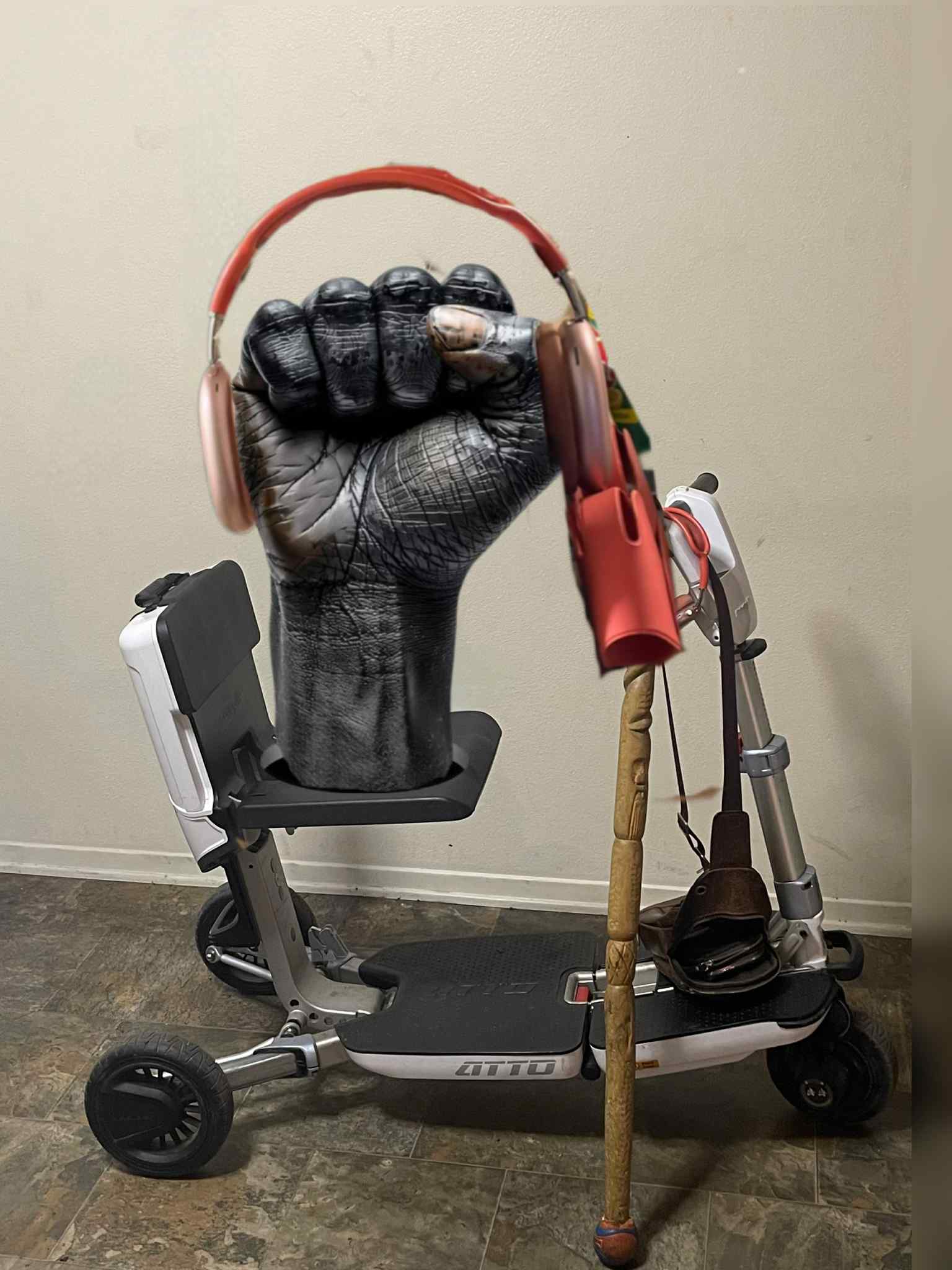
Krip-Hop Liberation: Toward a New Vision of Black Disabled Freedom
Liberation has always been at the heart of Black struggle. From enslaved Africans resisting bondage to the Civil Rights Movement, the Black Power Movement, disability justice organizing, Hip-Hop culture, and contemporary movements for racial justice, Black people have continually imagined and fought for freedom. Yet within many of these movements, Black disabled people have often remained invisible. Their labor, creativity, leadership, and survival have rarely been recognized as central to the struggle for liberation. Krip-Hop Liberation emerges from this absence. It declares that there can be no genuine Black liberation without Black disabled liberation.
Krip-Hop Liberation grows from the lived experiences of Black disabled people who have survived racism, ableism, poverty, policing, institutionalization, environmental injustice, and colonialism while continuing to create culture, knowledge, and movements. It is not simply another disability rights framework. It is a revolutionary political vision rooted in Black disability culture, Hip-Hop, Pan-African solidarity, and the long history of Black resistance across the African diaspora.
Krip-Hop Liberation is both a theory and a practice. It asks a fundamental question: What would liberation look like if Black disabled people were not treated as an afterthought but were instead recognized as leaders, intellectuals, artists, organizers, and visionaries? Rather than adding disability onto existing Black political analysis, Krip-Hop Liberation begins with Black disabled experiences and demonstrates how they deepen our understanding of freedom itself.
For centuries, Black disabled people have existed at the intersection of multiple systems of oppression. Anti-Black racism and ableism have worked together through slavery, colonialism, segregation, policing, mass incarceration, unequal education, inaccessible healthcare, forced institutionalization, and economic exploitation. Disability has often been used to justify Black exclusion, while racism has shaped how disability is experienced within Black communities. Krip-Hop Liberation insists that these systems cannot be separated. To dismantle one while ignoring the other leaves oppression intact.
At the same time, Krip-Hop Liberation refuses to define Black disabled people by oppression alone. Throughout history, Black disabled communities have developed knowledge, survival strategies, artistic traditions, and political practices that have sustained generations. Their lives demonstrate creativity in the face of exclusion and community in the face of abandonment. Their stories are not merely examples of resilience; they are sources of political theory.
Hip-Hop is central to this vision. Since its birth, Hip-Hop has served as a language of resistance for marginalized communities. Yet disabled voices have often been pushed to the margins within Hip-Hop history. Krip-Hop Liberation reclaims Hip-Hop as a space where disabled MCs, DJs, graffiti artists, dancers, poets, and cultural workers redefine strength, embodiment, beauty, and power. Through lyrics, performance, storytelling, and community organizing, Hip-Hop becomes more than entertainment. It becomes a tool for political education, cultural memory, and collective liberation.
Krip-Hop Liberation also recognizes that Black disability history did not begin in the United States. Across Africa, the Caribbean, Latin America, Europe, and other parts of the African diaspora, Black disabled people have been organizing, creating culture, and challenging exclusion for generations. Their struggles are connected by the shared histories of colonialism, slavery, migration, and global capitalism. Building relationships across these communities strengthens a global movement rooted in solidarity rather than charity.
This international perspective transforms disability politics. Instead of relying solely on Western disability rights models, Krip-Hop Liberation draws from African philosophies such as Ubuntu, the historical memory of Sankofa, Pan-African traditions of collective struggle, and local forms of resistance developed within Black communities around the world. Liberation becomes a shared project grounded in mutual responsibility, interdependence, and cultural survival.
Accessibility is not treated as an accommodation but as a political principle. Too often, accessibility is introduced only after decisions have already been made. Krip-Hop Liberation argues that accessibility must shape movements from their very beginning. Meetings, classrooms, performances, research projects, community organizing, and cultural institutions should all be designed with disabled people at the center. Accessibility is not charity. It is democracy in practice.
Knowledge production is another foundation of Krip-Hop Liberation. For too long, Black disabled people have been studied by others rather than recognized as scholars of their own lives. Krip-Hop Liberation challenges this imbalance by affirming that lived experience, oral history, music, poetry, community archives, and cultural organizing all produce legitimate knowledge. Black disabled communities are not simply research subjects; they are theorists whose experiences reshape how we understand race, disability, culture, and liberation.
This vision also requires building institutions capable of sustaining future generations. Liberation cannot depend solely on individual leaders. It requires archives that preserve Black disability history, educational programs that teach new generations, research grounded in community needs, artistic spaces where disabled creators flourish, and international networks that connect struggles across borders. Institutions rooted in Black disability knowledge become essential for protecting history while creating new possibilities for the future.
Krip-Hop Liberation ultimately challenges society to redefine freedom itself. Freedom is not simply the absence of discrimination. It is the presence of justice, access, dignity, creativity, cultural memory, community, and self-determination. It is the ability of Black disabled people to lead movements, produce scholarship, create art, shape public policy, build institutions, and imagine futures on their own terms.
The future envisioned by Krip-Hop Liberation is one where Black disabled children grow up knowing their history, where artists are recognized as intellectuals, where scholars remain accountable to their communities, where accessibility is expected rather than requested, and where disability is understood not as a weakness but as a vital source of knowledge and political imagination.
Krip-Hop Liberation is therefore more than a concept. It is a movement. It is an invitation to rethink Black liberation through the experiences of those too often pushed to the margins. It honors the generations of Black disabled people who resisted invisibility while creating culture, building community, and expanding the meaning of freedom. By placing Black disabled people at the center of liberation struggles, Krip-Hop Liberation does not narrow the struggle for justice. It expands it, offering a more complete vision of freedom for everyone.