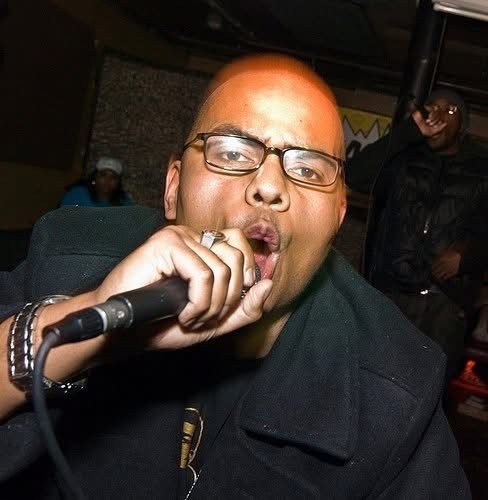
Reading T-K.A.S.H.’s “Sign Language” Through Krip-Hop Theory: Oakland, Berkeley, and Black Disability Politics
T-K.A.S.H.’s song “Sign Language,” from his 2009 album Brains All Over the Streets, deserves to be understood within the same historical and cultural landscape that produced Krip-Hop Nation. The album was released three years after Krip-Hop Nation was founded in Berkeley, California, in 2006, making it part of an important Bay Area moment when politically conscious Hip-Hop, disability activism, and community organizing were intersecting in new ways. Brains All Over the Streets was released on May 12, 2009, through Guerrilla Funk Recordings, and “Sign Language” appears as the album’s tenth track.
From a Krip-Hop perspective, place is essential. Oakland and Berkeley have long functioned as interconnected centers of Black radical politics, independent Hip-Hop, disability rights activism, and grassroots organizing. While Oakland nurtured politically conscious artists like T-K.A.S.H., Berkeley became the birthplace of Krip-Hop Nation in 2006.
The close geographic and political relationship between these two cities created a unique cultural environment where revolutionary Black politics and disability consciousness could influence one another.
The timing is equally significant. Between 2006 and 2009, the Bay Area was experiencing a flourishing of independent Hip-Hop, community media, disability justice activism, and radical cultural production. Krip-Hop Nation emerged to center Black disabled artists and challenge the ableism embedded within both mainstream society and Hip-Hop culture.
Three years later, T-K.A.S.H.’s album, Brains All Over the Streets, entered this same Bay Area ecosystem, making “Sign Language” feel remarkably aligned with Krip-Hop’s mission, even though it was not explicitly written as a Krip-Hop song.
The title “Sign Language” itself symbolizes one of the central principles of Krip-Hop Theory: recognizing forms of communication that dominant society often marginalizes. Sign language represents more than a means of communication for Deaf people; it challenges the assumption that spoken language is the only legitimate form of expression. Likewise, Krip-Hop insists that Black disabled people produce knowledge through multiple embodied languages including speech, sign, rhythm, silence, movement, assistive technology, and performance.
This is also where the song connects with Krip Linguistics, a concept developed within Krip-Hop Theory. Krip Linguistics expands Hip-Hop language by recognizing disability-based forms of communication as culturally rich, politically significant, and artistically creative. From this perspective, “Sign Language” becomes an invitation to rethink communication itself through a Black disability lens.
Finally, T-K.A.S.H.’s commitment to political education, community empowerment, and revolutionary Hip-Hop places him within the same tradition that inspired Krip-Hop Nation. Although Krip-Hop was founded in Berkeley in 2006 and Brains All Over the Streets was released in Oakland in 2009, both emerged from the same Bay Area tradition of using Hip-Hop as a vehicle for liberation, consciousness, and social transformation. Rather than seeing “Sign Language” as simply another political rap song, Krip-Hop Theory allows us to understand it as part of the broader cultural conditions that made a Black disability-centered Hip-Hop movement possible.
Watch “Sign Language” on YouTube
Stay tuned for an interview with T-K.A.S.H.